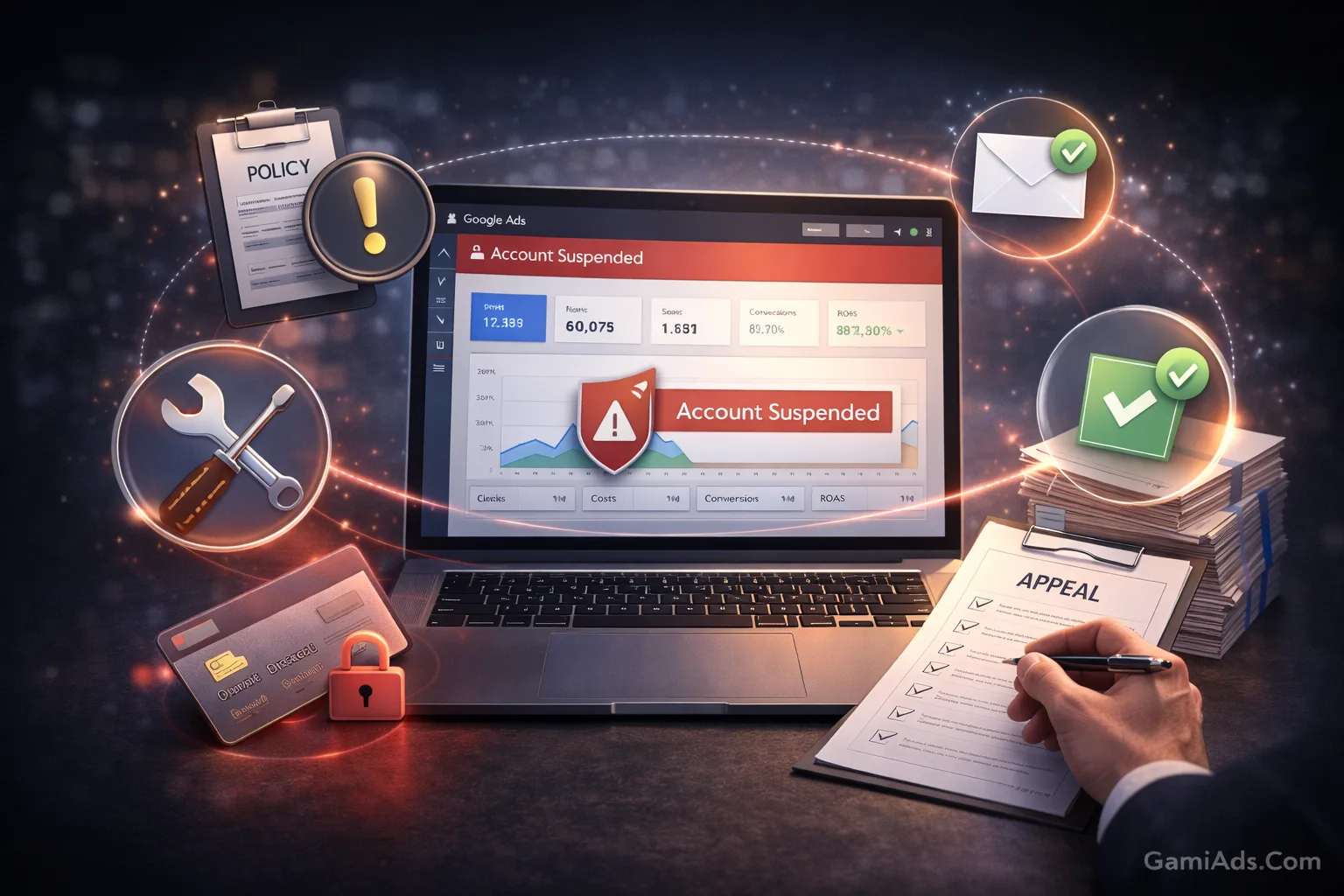
What should you do first when an ad account is disabled?
Seeing a disabled ad account notice is always stressful. Many advertisers react impulsively by opening a new account right away, swapping payment methods repeatedly, or logging in from multiple environments in an attempt to fix it fast. In reality, those rushed actions often create even more abnormal signals and make the situation worse.
The best first step is to stop, stay calm, and treat this as a structured incident response. You need to separate emotion from decision-making, read the platform’s notice carefully, and shift into diagnosis mode before doing anything else.
- Do not create a new account immediately before understanding why the old one was disabled.
- Do not change payment methods or login environments in a chaotic way.
- Prioritize reading the notice and identifying the real nature of the issue first.
- A structured response is always more effective than an emotional one.
Step 1: Identify the real reason the account was disabled
If you want your appeal to have a chance of succeeding, you need to know why the account was disabled in the first place. In most cases, the cause falls into one of four main groups: policy violations in the content or niche, suspicious payment activity, unusual login behavior, or indirect issues coming from another linked asset such as a page, BM, or website.
That is why you should go straight to Account Quality, review the warning emails, and audit your most recent campaigns carefully. Do not look only at the ad itself. Review the landing page, wording, payment source, and account activity history as well. Correct diagnosis is the foundation for every step that follows.
- Policy violations are the most common cause, especially with sensitive content or overly strong claims.
- Failed payments, repeated card changes, or cards with a bad history can also trigger account restrictions.
- Logging in from multiple IPs, devices, or changing environments too quickly is a major risk signal.
- A penalized related asset can also cause the ad account to be disabled indirectly.

Step 2: Appeal through a clear four-step process instead of sending emotional requests
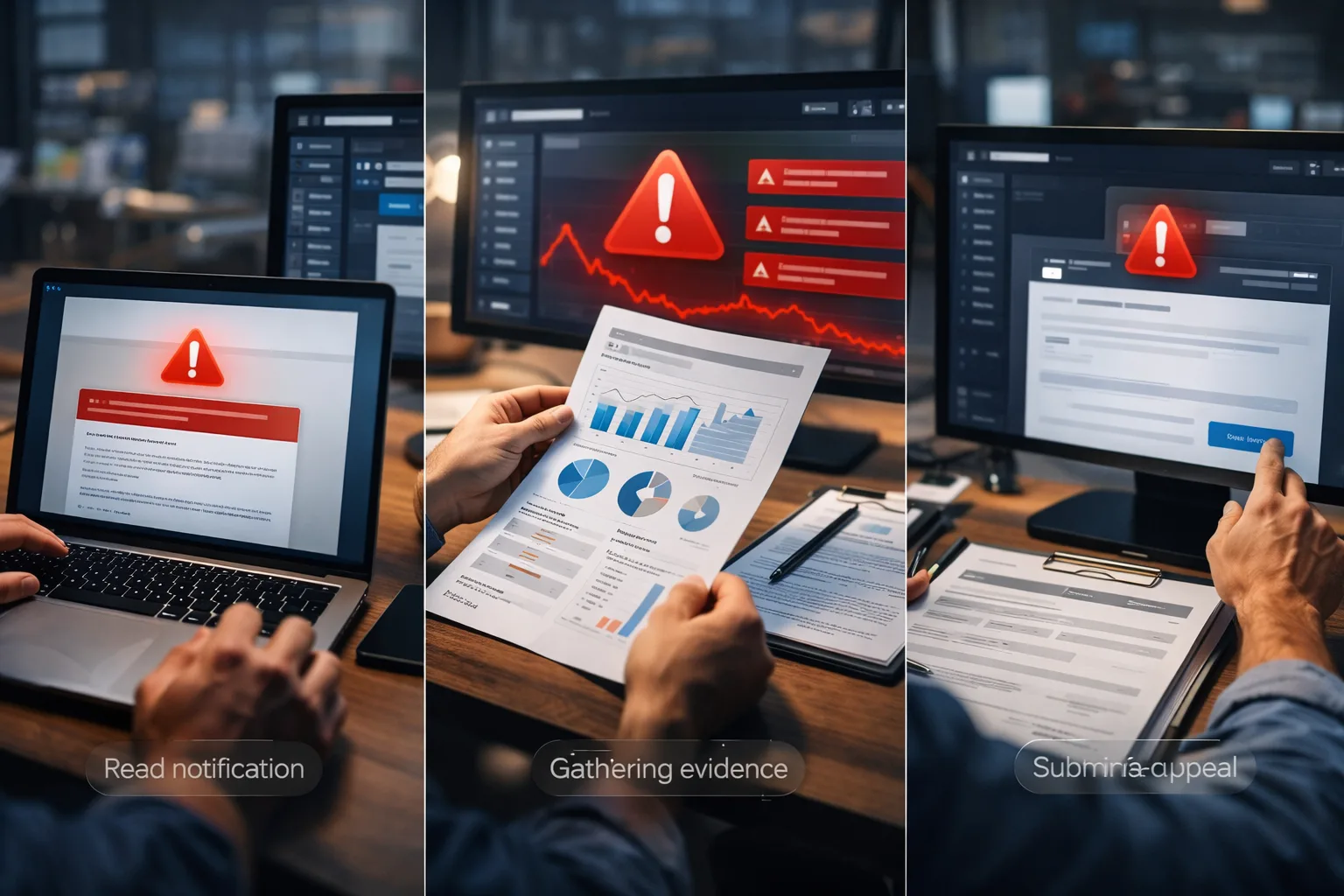
An appeal is not a race to see who submits the most forms. It is a process of presenting a clear and logical case. First, read the notice carefully to understand what kind of violation or issue the platform is pointing to. Then review your ads, images, wording, landing pages, and gather evidence showing either that you have fixed the problem or that the case was flagged incorrectly.
When writing the appeal, stay polite, stay focused, and be honest. If you were actually at fault, acknowledge it, explain what content was removed or corrected, and confirm that the issue will not be repeated. If you believe the platform made a mistake, explain your case clearly, describe your product or service in plain terms, and attach any relevant supporting evidence.
- Step 1: read the reason for the restriction in Account Quality or in the warning email.
- Step 2: review all ads, landing pages, and account behavior connected to the issue.
- Step 3: write a clear and polite appeal that includes the account ID and the main point of the case.
- Step 4: submit it and wait instead of spamming the appeal form repeatedly.
How long does an appeal take, and when should you stop pushing it?
After submitting an appeal, the most important thing is patience. Some cases receive a response within a few days, while others can take several weeks depending on complexity and platform priority. During that waiting period, sending multiple identical appeals usually does not improve your chances and may even be treated as spam-like behavior.
You should also prepare for the worst-case scenario. If the platform says the decision is final, if the account was disabled بسبب a serious issue such as fraud, system evasion, or counterfeit goods, or if repeated appeals keep getting rejected automatically, that is usually the point where you should stop trying to revive the old account and move to a replacement strategy.
- An appeal may take anywhere from a few days to several weeks depending on the case.
- Submitting the same appeal over and over is not a good strategy.
- If the platform has issued a final decision, it is better to accept it and change direction.
- Knowing when to stop can save more time and money than pushing a hopeless case.
If the appeal fails, what is the more practical backup plan?
A failed appeal does not mean you have to go back to weak accounts or unstable resources. In fact, this is often the best moment to reassess your operating foundation and rebuild something stronger. If you were previously running on low-trust accounts, weak BM structures, or poorly organized resources, repeating the same setup will usually lead to the same cycle of launching, losing the account, and appealing again.
A more practical approach is to invest in stronger resources from the start. On Facebook, that may mean a higher-trust BM, better-quality ad accounts, and a clearer permission structure. On Google, that may mean choosing an account type that fits your niche, a more stable payment setup, or even Invoice if you already need larger spend capacity and long-term stability. The goal is not to buy the strongest account possible, but to choose an option that is cleaner and more suitable than your old setup.
- Do not replace a failed account with another weak account and expect a different result.
- Rebuilding should start with account trust level and a better asset-management structure.
- Facebook setups need stronger BM and ad accounts, while Google setups need the right account type and stable billing.
- A good backup plan should make your system more durable, not just help you relaunch quickly.

Conclusion: handling a disabled ad account properly is a real test of professional operators
A disabled ad account is always an expensive lesson, but it is also a chance to rethink how you operate. If you handle it correctly, you will gain a better understanding of platform policy, how account behavior is evaluated, and why a clean resource foundation matters so much under long-term pressure.
The right path usually has three parts: accurate diagnosis, a professional appeal, and a ready backup plan. Experienced advertisers know that no one wants an account disabled, but everyone needs a system strong enough not to become paralyzed when it happens.
- Do not panic when an ad account is disabled. Treat it like a technical process.
- A strategic appeal is always better than an emotional reaction.
- If the old account cannot be recovered, upgrade the operating foundation instead of patching things temporarily.
- A strong backup plan is what keeps the business moving when an account goes down.
Frequently Asked Questions
Can a disabled ad account still be appealed?
Yes, in many cases you can still submit an appeal. However, the chance of success depends on why the account was disabled, how well the appeal is prepared, and whether you have actually fixed the issue or can show that the platform made a mistake.
Should I create a new account immediately after an ad account is disabled?
Usually no, not before you understand the real cause. If the issue came from payment activity, login behavior, or a related asset, opening a new account too quickly can cause the new one to run into the same problem.
How should an ad account appeal be written?
The appeal should be concise, polite, and focused. Include the account ID, explain why you believe the account should be reviewed again, mention what has been corrected if relevant, and attach any supporting evidence. Avoid emotional writing or blaming the system.
How long does it take to hear back after submitting an appeal?
The response time can range from a few days to several weeks depending on the platform and how complex the case is. While waiting, it is best not to keep submitting the same form repeatedly.
What should I do if the appeal fails?
At that point, it is usually better to move to a backup plan instead of trying to rescue the account at all costs. Review the weaknesses in your previous setup and rebuild with stronger accounts, better BM structure, or a more suitable payment model to reduce the risk of the same issue happening again.