Why does it matter to understand Facebook account types before running ads?
When getting started with Facebook Ads, many people assume Via, Clone, BM, and Invoice are just different names for similar account options. In reality, they represent very different account structures and operating models, from trust level and asset ownership to payment flow and scalability.
If you choose the wrong setup from the beginning, you will often run into three major issues: unstable accounts, limited room to scale, and extra costs caused by account-related problems. That is why the smarter approach is to choose based on your actual needs, not just on price.
- If you run ads as an individual, account stability and the ability to create ad accounts matter most.
- If you work with a team, you need a management layer that protects assets and handles permissions properly.
- If you spend at scale, billing structure and spending limits become critical factors.
- If long-term safety matters, do not assume the cheapest option is the right one.
Clone vs. Via: both are Facebook profiles, but the gap in trust is significant
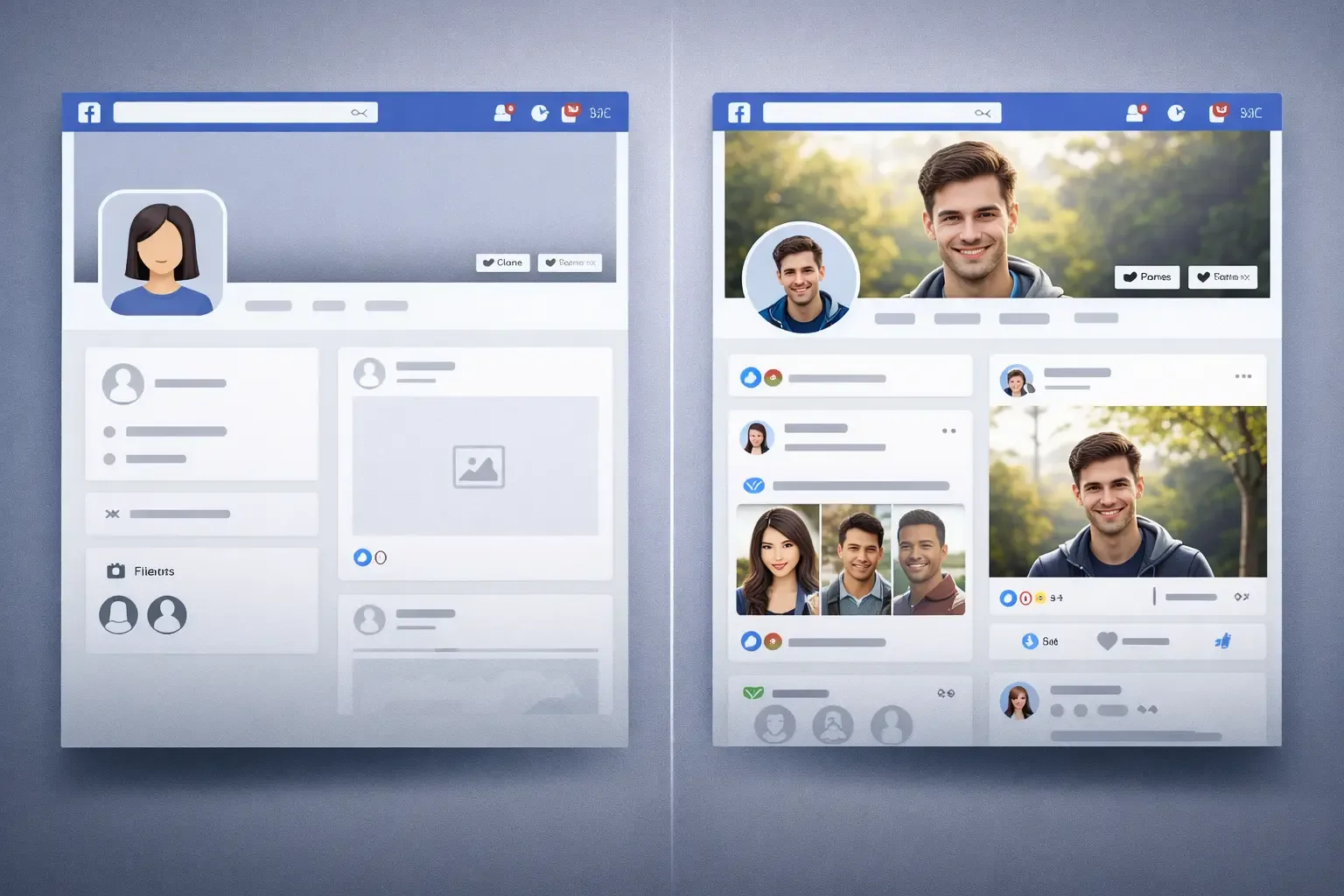
A Clone account is usually created quickly, with thin profile details and little to no real activity history. Because the data foundation is weak, this type of account typically has a low trust level and is more likely to be checkpointed, restricted, or disabled when unusual behavior appears.
A Via account, on the other hand, is a profile with age, login history, engagement, friends, or a more natural pattern of activity over time. For advertisers who are just starting out, a Via account is often a more practical choice than a Clone because it is generally better suited for creating ad accounts, managing pages, or holding BM assets.
- Clone accounts may serve short-term support purposes, but they are not a durable choice for serious advertising.
- Via accounts tend to be more stable, though they still need to be used properly to avoid checkpoints.
- If your budget is still small and you want a safer starting point, Via is usually more realistic than Clone.
- Do not choose Clone only because it is cheaper if your goal is long-term ad operations.
What is BM, and why do serious advertisers almost always need it?
BM, or Business Manager, is not a personal profile. It is a business management layer designed to centralize advertising assets. Inside BM, you can manage pages, ad accounts, pixels, partners, and the permissions assigned to each team member.
The biggest advantage of BM is that it separates business operations from personal Facebook accounts. This becomes especially important when you manage multiple pages, work with several people, or need to hand off responsibilities between media buyers, team members, and support staff.
- BM centralizes management of pages, ad accounts, and other advertising assets.
- BM makes it possible to assign clear permissions and reduces the risk of relying on a shared personal account.
- BM is suitable for small teams, businesses, and agencies that want a structured way to operate.
- A Via account may help you get started, but BM is the foundation for long-term account management.

What is a Facebook Invoice account, and when do you actually need one?
A Facebook Invoice account usually refers to a postpaid billing setup with a credit line, designed for businesses or agencies with larger ad spend and a more formal payment process. It is not the default option for beginners, but rather a more advanced operating model compared with standard prepaid or manual top-up methods.
The main advantages of an Invoice setup are stronger support for large budgets, more centralized payment handling, and a better fit for mature advertising operations. That said, the barrier to entry is higher, the requirements are stricter, and not every advertiser needs this model in the early stages.
- Invoice works best when you are already spending at scale and need a more stable payment structure.
- Businesses and agencies with mature systems usually benefit more from Invoice than solo beginners do.
- If your budget is still small or you are only testing a market, moving to Invoice too early is often unnecessary.
- Choosing Invoice at the right stage improves process efficiency instead of simply chasing the idea of a stronger account.

A quick comparison of Via, Clone, BM, and Invoice based on real-world needs
From an operational perspective, Clone is the weakest option, Via is a more practical starting point, BM is the essential management layer for serious advertisers, and Invoice is the solution built for large-scale spending. Each one has its own role, but they should not be treated as interchangeable.
The simplest way to choose is to reverse the question: are you running solo or with a team, are you testing at a small scale or planning to scale hard, and is your biggest concern cost or risk? Once you answer those three questions, it becomes much easier to decide whether you should start with Via, build around BM, or move toward Invoice.
- Clone: cheap but high risk, and not suitable for long-term advertising.
- Via: a practical option for beginners, solo advertisers, or those who need a profile with stronger history.
- BM: the right fit when you need asset management, permissions, and a structured operating system.
- Invoice: best suited for agencies or businesses that already spend and operate at scale.
So which option makes the most sense for you?
If you are new to advertising, have a limited budget, and want something easier to start with, a quality Via account is usually the safer entry point. If you already manage pages, have a team, or want to build a more organized advertising system, you should move toward BM early so your business does not depend on one personal profile.
If you are already operating with large budgets, need a formal billing process, and want greater stability during scale, then Invoice becomes a more relevant option. In short, there is no single best account type for everyone. The right choice depends on the stage your business is in right now.
- New advertisers: start with a stable Via account for a safer foundation.
- Small teams or businesses: set up BM early for long-term asset control.
- Agencies or brands planning aggressive scale: consider Invoice once the need is real.
- Do not choose based on hype—choose based on goals, resources, and risk tolerance.
Frequently Asked Questions
What is the biggest difference between Via and Clone?
The main difference is account history and trust level. A Via account usually has age, activity, and more natural behavioral signals, while a Clone account tends to have very little history and is more likely to face checkpoints or restrictions.
Should a beginner start with Via or BM for Facebook Ads?
If you are just getting started, a stable Via account can be a practical entry point. But once you begin managing pages, ad accounts, or working with a team, BM becomes the better long-term choice because it gives you proper asset control and permission management.
Is BM the same as an ad account?
No. BM is a business management layer used to control multiple assets such as pages, ad accounts, pixels, and team permissions. An ad account is only one component within that broader structure.
Is a Facebook Invoice account suitable for a small budget?
Usually not as a first choice. Invoice is generally more suitable for businesses or agencies with larger spending needs, centralized billing requirements, and a more mature advertising operation.
Should you use Clone accounts to run ads?
Not if you want long-term stability. Clone accounts may be cheaper, but they usually come with higher risk and a greater chance of restrictions or disabled features, which makes them a poor fit for serious ad operations.