Why do you need a checklist before buying an ad account?
The ad account market always has two sides. On one side, it gives you access to stronger resources so you can launch campaigns faster. On the other, it comes with plenty of risks, from poor-quality accounts and assets with bad history to sellers who take little or no responsibility after the sale. If you buy based on instinct alone, you may end up paying for something that either does not work at all or only works briefly.
That is why you need a clear checklist before making payment. A few extra minutes of careful review can help you avoid login issues, checkpoints, lost admin access, or buying an account that simply does not match your actual advertising needs.
- Do not judge an ad account only by its price or a short sales pitch.
- The biggest risk often shows up after the purchase, when real operations begin.
- A strong checklist helps you filter both technical risks and seller-related risks.
- Buying the right account from the start is always cheaper than fixing a bad decision later.
Group 1: Check the seller before you check the account
The first thing to evaluate is not how powerful the account looks, but whether the seller is trustworthy. A serious provider usually has a clear website, transparent contact details, a long enough operating history, and a consistent way of advising customers. By contrast, if the seller only works through anonymous accounts, gives vague answers, or cannot provide verifiable information, you should be cautious immediately.
Right after that, review the warranty and support policy in detail. An ad account is a resource with real operational risk, so the terms for replacement, warranty period, support scope, and troubleshooting channels should all be clarified before you pay.
- Check the website, fanpage, time in business, and feedback from previous customers.
- Ask clearly about the warranty terms, including first-login errors, checkpoints, pre-use issues, and problems that happen after use.
- Confirm the warranty period and the support channel available if something goes wrong.
- If the seller avoids policy questions or answers vaguely, that is a strong red flag.

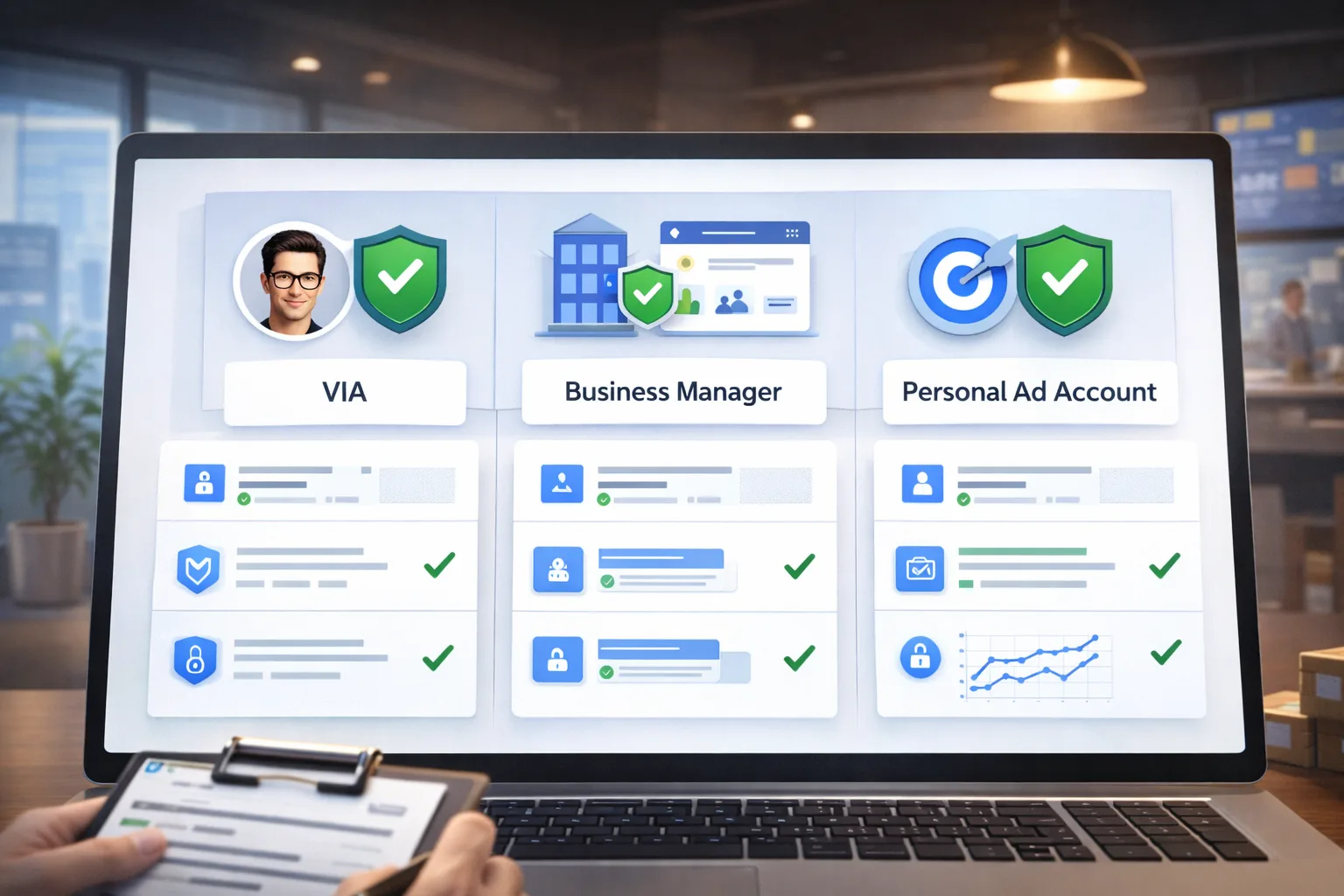
Group 2: If you are buying a Facebook account, inspect the Via, BM, and ad account carefully
In the Facebook ecosystem, the most important layer is usually the Via and the Business Manager. The Via holds core control, so you should check the account age, interaction quality, checkpoint history, and whether you can change the password, email, and enable 2FA after receiving it. A weak Via or one with very thin history can create risk for every asset connected to it.
For BM, you should verify the BM type, its verification status, spend limits, and past operating history. If your goal is to acquire the personal ad account inside the Via, you should also review its active status, spending threshold, and payment history so you do not end up buying an account that has already been disabled or quietly restricted.
- The Via should have solid age, real engagement, and allow full security changes after handover.
- Ask clearly about checkpoint history or any unusual behavior the Via has faced before.
- BM should be reviewed for BM type, verification level, spending limit, and any policy history.
- The personal ad account inside the Via should be checked for active status, payment history, and current spend threshold.
Group 3: If you are buying a premium account, do not skip account type, history, and access rights
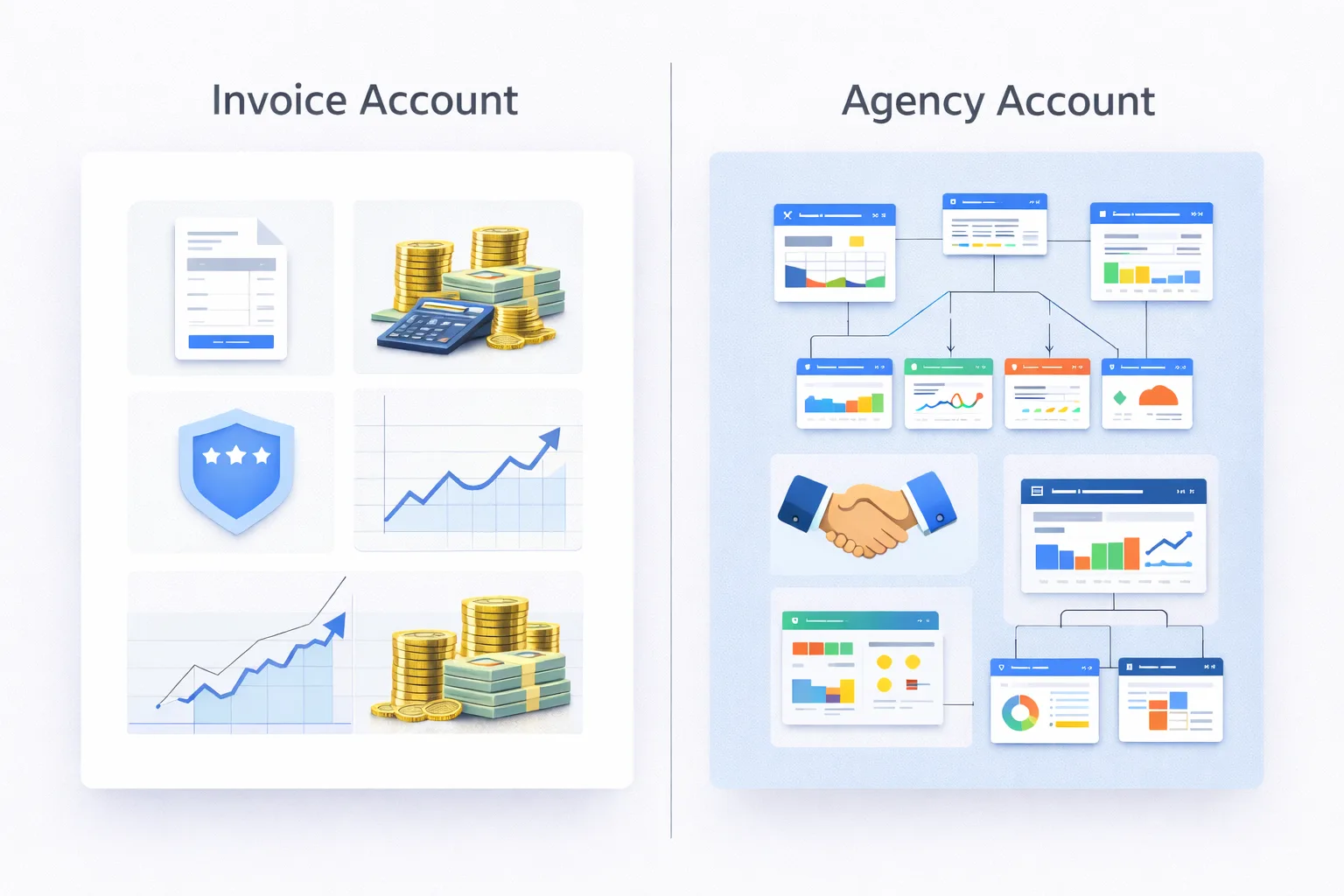
For premium resources such as Invoice or Agency accounts, the first step is to verify the exact account type. Many sellers use vague labels to push the price higher, even though these account types work quite differently in billing structure and day-to-day operation.
Once the type is confirmed, go deeper into niche history, hidden limitations, and the level of admin access you will truly have after purchase. An account may look clean on the surface, but if it has run sensitive niches before or the seller still keeps the highest level of control, it remains a serious long-term risk.
- Ask to review the billing section so you can clearly distinguish between an Invoice account and an Agency account.
- Ask what niches the account ran before and whether any hidden restrictions are currently in place.
- Clarify exactly what level of access you will receive and whether you can add, remove, or manage other users yourself.
- Avoid buying if the seller still keeps all critical control after the handover.
Group 4: Two final checks that are often ignored but highly valuable
Before making the final decision, ask the seller how to use the account safely during the first stage. Even a strong account can run into problems quickly if the first few actions are handled poorly. An experienced seller will usually tell you how to log in, how to let the account settle, and how to launch the first campaign more safely.
Finally, do not ignore your direct impression during the conversation. If the seller seems unclear, inconsistent, dismissive, or keeps dodging important questions, take that as a warning sign. Buying an ad account is not only about buying a product. It is also about buying peace of mind afterward.
- Ask for a clear process for logging in, settling the account, and operating safely in the first few days.
- Prioritize sellers who can guide you clearly instead of simply handing over the account and disappearing.
- Evaluate professionalism, response speed, and transparency during the conversation.
- If your instinct tells you something is off, it is usually better to stop before making payment.

A quick recap of the 10 golden checks before you pay
If you condense the whole process, your ad account buying checklist should follow this order: check the seller, check the warranty, check the account quality, check the history, check the access rights, and finally check how much support the seller offers after purchase. Following this order helps you spot risk early instead of discovering it after the money is gone.
The real goal is not to find the cheapest account. It is to find a suitable resource that actually works and comes with accountability if problems appear later. That is what safe and cost-effective ad account buying really looks like in the long run.
- 1. Check the seller’s background and credibility.
- 2. Check the warranty and support policy.
- 3. Check the health of the Via if you are buying a Facebook account.
- 4. Check the BM status and limits.
- 5. Check the condition of the personal ad account inside the Via.
- 6. Check the exact type of premium account being sold.
- 7. Check the niche history and any hidden restrictions.
- 8. Check the real admin rights and access level.
- 9. Check whether there is safe-use guidance after handover.
- 10. Check the seller’s transparency and overall trustworthiness.
Frequently Asked Questions
When buying an ad account, should you check the seller first or the account first?
You should check the seller first. If the seller is not transparent or has no clear policy, then every later account check becomes less meaningful because the biggest risk is already in the handover and support process.
If you are buying a Facebook Via, what should you inspect most carefully?
The three most important factors are account age, engagement history, and whether you can fully change the security details after receiving it. These directly affect trust level and your ability to keep the assets safe later on.
How can you tell the difference between an Invoice account and an Agency account?
The simplest way is to review the billing section and operating model. Invoice accounts are usually tied to invoicing or a credit-based billing setup, while Agency accounts are often managed more flexibly by the provider within their own system.
Is it a good idea to buy an account just because it is cheap?
No. A low price may look attractive at the moment of purchase, but if the account has bad history, incomplete access rights, or no clear warranty, the cost of fixing the problem later is often much higher.
What are the signs of a good seller?
A good seller usually has clear information, transparent policies, consistent advice, a willingness to explain warranty terms in detail, and safe-use guidance after delivery. These are signs that they are not just selling an account, but also taking responsibility for what they provide.